

Dr Mark Kohout

Managing Buttock Reshaping Scars

doctor working
Home » Blog » Managing Buttock Reshaping Scars
Managing Buttock Reshaping Scars by Dr Mark Kohout

Table of Contents

Managing Buttock Reshaping Scars banner by Dr Mark Kohout

Dr Mark Kohout FRACS is a Specialist Plastic Surgeon based in Broadway, Sydney, with experience in body contouring procedures including buttock reshaping surgery. Buttock reshaping scars vary depending on the procedure, incision placement, skin type, healing response and post-operative care, and they usually change gradually as the tissues heal.

Scarring is one of the most common concerns patients have when considering buttock reshaping surgery. Many patients want to know where scars may sit, how visible they may be and what they can do to support healing after the procedure. It is important to understand that scars are a normal part of surgery, even when incision placement is carefully planned.

This article provides general information for patients who are considering buttock reshaping or recovering after surgery. It does not replace personalised scar advice from Dr Kohout’s practice, because scar appearance depends on the procedure performed, incision location, wound healing, skin type, tension on the scar and individual recovery factors.

Where Scars Typically Form After Buttock Reshaping​

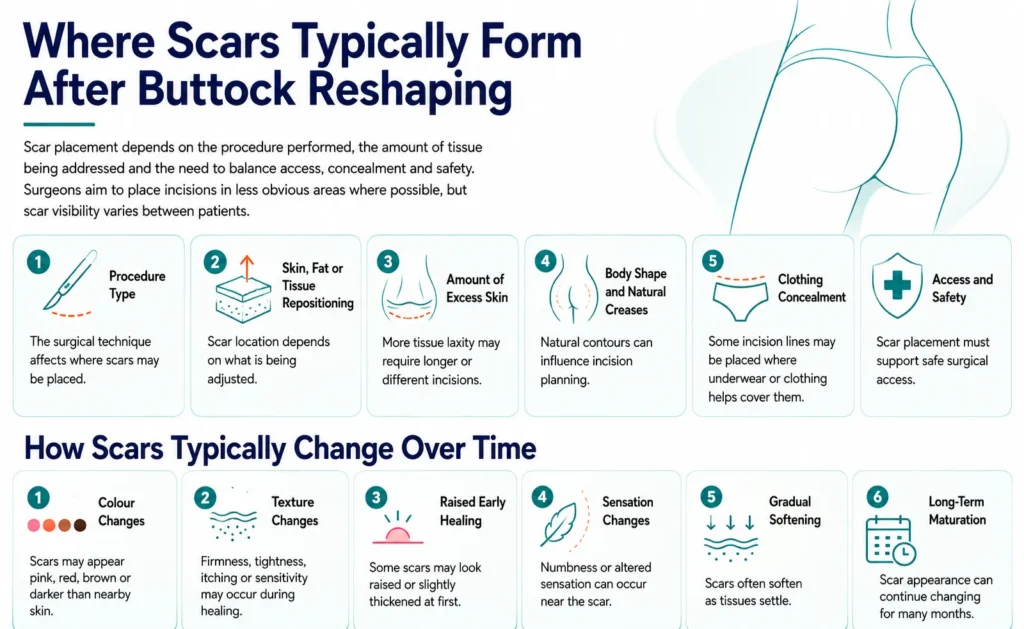
Dr Mark Kohout FRACS and his team at the Broadway Sydney practice discuss incision placement as part of the planning process for buttock reshaping surgery. Scar location depends on the technique used, the amount of reshaping required and the patient’s anatomy.

Scars after buttock reshaping may be influenced by:

  • The type of buttock reshaping procedure performed
  • Whether skin, fat or tissue repositioning is involved
  • The amount of excess skin or tissue laxity being addressed
  • The patient’s body shape and natural creases
  • Areas where clothing or underwear may help conceal incision lines
  • The need to balance scar placement with surgical access and safety

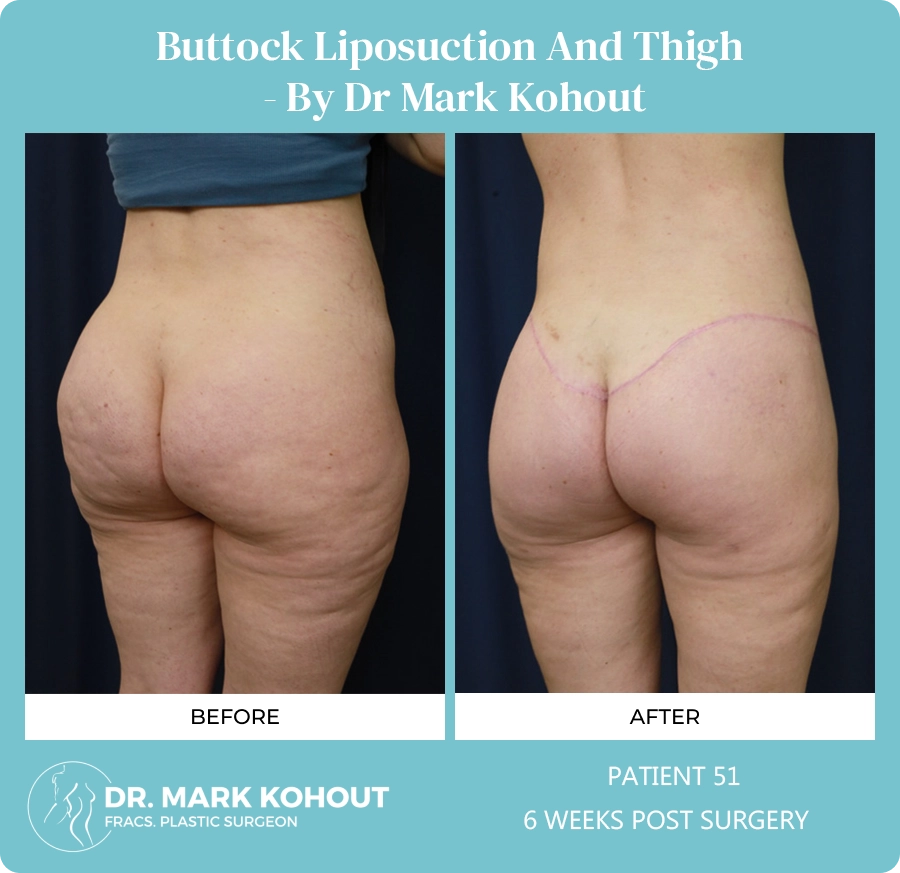
Surgeons aim to place incisions in less obvious areas where possible, such as natural creases or locations that may be covered by clothing. However, no surgical scar can be guaranteed to be invisible, and scar visibility varies between patients.

Where Scars Typically Form After Buttock Reshaping by Dr Mark Kohout

How Scars Typically Change Over Time​

Scars usually change as the body moves through the healing process. Early scars may look more noticeable before they gradually soften, flatten or fade, although the degree of change differs from person to person.

During scar healing, patients may notice:

  • Pink, red, brown or darker colouring compared with nearby skin
  • Firmness, tightness, itching or sensitivity around the incision line
  • Raised or slightly thickened areas during early healing
  • Numbness or altered sensation near the scar
  • Gradual softening as the tissues settle
  • Changes in appearance that continue over many months

Scars do not all mature in the same way, and some patients are more prone to widened, darker, raised or thickened scars. Skin type, genetics, wound tension, sun exposure, smoking history, infection, movement and individual healing response can all affect how a scar develops.

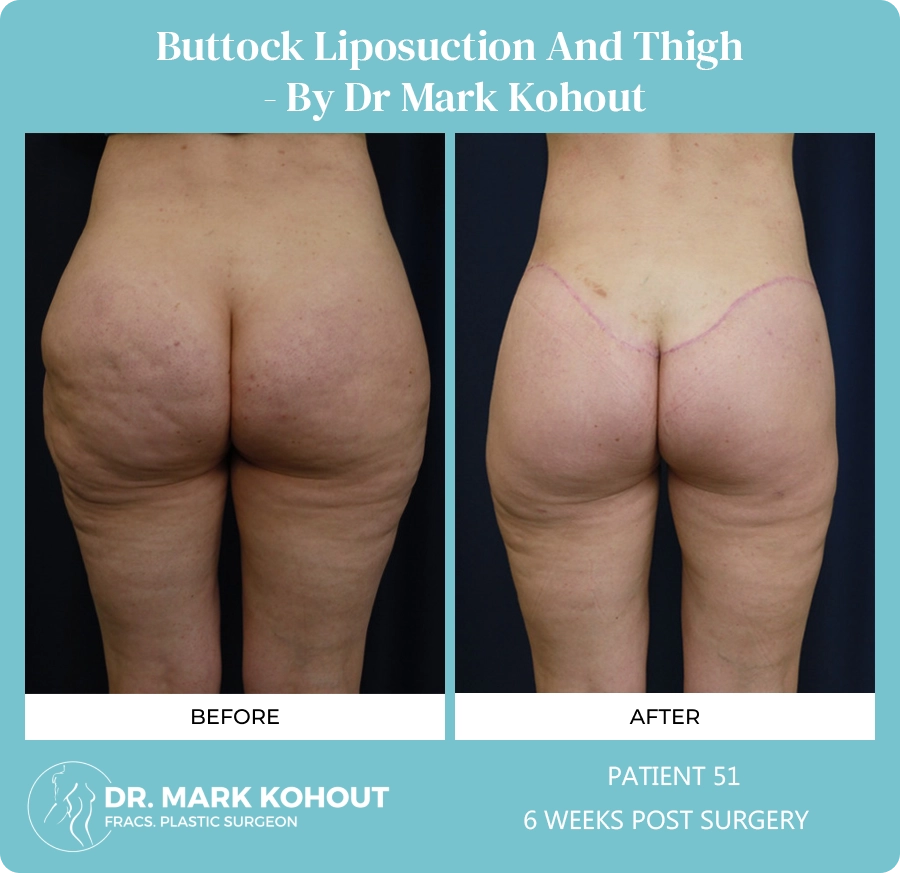
Buttock Liposuction Before and After Images

General Scar Care During Recovery​

General scar care after buttock reshaping should begin with following the wound care instructions provided by the surgical team. Patients should avoid starting creams, oils, massage, silicone products or home remedies until Dr Kohout’s team has advised that the incision area is ready.

Scar care may include:

  • Keeping dressings and incision areas managed as instructed
  • Attending follow-up appointments so healing can be checked
  • Avoiding unnecessary friction, rubbing or stretching around incision areas
  • Wearing garments only as directed by the surgical team
  • Protecting healing scars from sun exposure when the area is uncovered
  • Asking before applying any scar cream, tape, oil or topical product

No product can be relied on to remove a surgical scar completely, and patients should be cautious about claims that suggest otherwise. Scar care is usually about supporting the healing environment, monitoring changes and following personalised advice from the treating team.

When To Raise Scarring Concerns With Your Surgeon​

Individual scarring varies, so follow-up appointments are important after buttock reshaping surgery. Patients should raise concerns with Dr Kohout’s Broadway Sydney practice if a scar looks or feels different from what they were told to expect during recovery.

Concerns to discuss may include:

  • A scar becoming increasingly raised, thickened or widened
  • Darkening, redness or colour changes that worry the patient
  • Increasing tenderness, heat, swelling or discomfort around the scar
  • Itching, sensitivity or tightness that is persistent or worsening
  • Discharge, bleeding, odour or wound separation
  • Uncertainty about when to begin scar care products or massage

Patients should not wait until scars have fully matured before asking questions, especially if they are unsure whether healing is progressing normally. Early review can help Dr Kohout’s team assess the incision area and advise whether any change in care is needed.

Discuss Buttock Reshaping Scars With Dr Kohout’s Broadway Sydney Practice​

If you are concerned about buttock reshaping scars, raise your questions with Dr Mark Kohout FRACS and his team at the Broadway, Sydney practice. Your scar management plan should reflect your procedure, incision placement, skin type, healing progress and the instructions provided during follow-up.

Scars are part of any surgical procedure, but realistic expectations and appropriate aftercare can help patients feel more informed during recovery. A consultation or follow-up appointment is the best place to discuss your individual scar pattern, care instructions and any concerns about healing.

FAQs About Buttock Reshaping Scars​

Do buttock reshaping procedures always leave scars?Yes, any surgery that uses incisions will leave scars. The location, length and visibility of those scars depend on the technique used, incision placement, skin type, healing response and aftercare.
Where are buttock reshaping scars usually placed?Scar placement depends on the type of buttock reshaping procedure being performed. Surgeons aim to place incisions in less obvious areas where possible, such as natural creases or areas that may be covered by clothing, but this cannot be guaranteed for every patient.
Are buttock reshaping scars visible in underwear or swimwear?This depends on the incision location, the style of underwear or swimwear and how the individual scar heals. Patients should ask Dr Kohout’s team about likely incision placement during consultation so they can understand what may apply to their procedure.
How long do buttock reshaping scars take to fade?Scars often change gradually over many months, but fading is not the same for every patient. Some scars soften and become less noticeable over time, while others may remain darker, wider, raised or more visible.
Can scar creams remove buttock reshaping scars?No scar cream can be relied on to remove a surgical scar completely. Patients should ask Dr Kohout’s team before using creams, oils, silicone products or massage, as timing and suitability depend on incision healing.
Why is my scar raised or firm after surgery?Early scars may feel firm, raised, tight or sensitive as part of the healing process. If the scar becomes increasingly thickened, painful, red, hot, widened or associated with discharge, it should be reviewed by the clinic.
Can sun exposure make buttock reshaping scars darker?Sun exposure can make healing scars more prone to pigmentation changes when the area is uncovered. Patients should follow Dr Kohout’s scar care advice and protect healing incision areas from unnecessary sun exposure.
When should I contact the clinic about a scar concern?Patients should contact Dr Kohout’s Broadway Sydney practice if they notice worsening redness, heat, tenderness, swelling, discharge, bleeding, wound separation or a scar that is becoming increasingly raised or uncomfortable. Any uncertainty about scar care products, massage or healing progress should also be raised during follow-up.
Medical References

Take our Plastic Surgery Quiz to find out if you’d be a good candidate and if you are ready for cosmetic surgery.​

Download Dr Mark Kohout’s Liposuction Surgery Guide

Further Reading

Related Blog Posts

What Is Empty Buttock Syndrome? Causes, Volume Loss & Treatment Options in Sydney

What Is Empty Buttock Syndrome? Causes,…

Volume changes in the buttocks are sometimes described as “Empty Buttock Syndrome,” a non-medical term used to explain a noticeable reduction in shape or projection following certain procedures or significant…
Gluteal Augmentation With Implants in Sydney: Understanding a Surgical Option

Gluteal Augmentation With Implants in Sydney:…

Interest in fuller, more projected buttock shapes has grown steadily, encouraged in part by social media and online imagery. Many people in Sydney arrive at a consultation with screenshots, mixed…

FAQs About Bodylift Surgery

FAQs About Bodylift Surgery

Dr Mark Kohout, Plastic Surgeon in Sydney, brings over 25 years of experience in aesthetic and reconstructive surgery. His practice is known for its patient-focused approach and thorough consultation process.…
Dr Mark Kohout

Experienced Plastic Surgeon

Dr. Mark Kohout

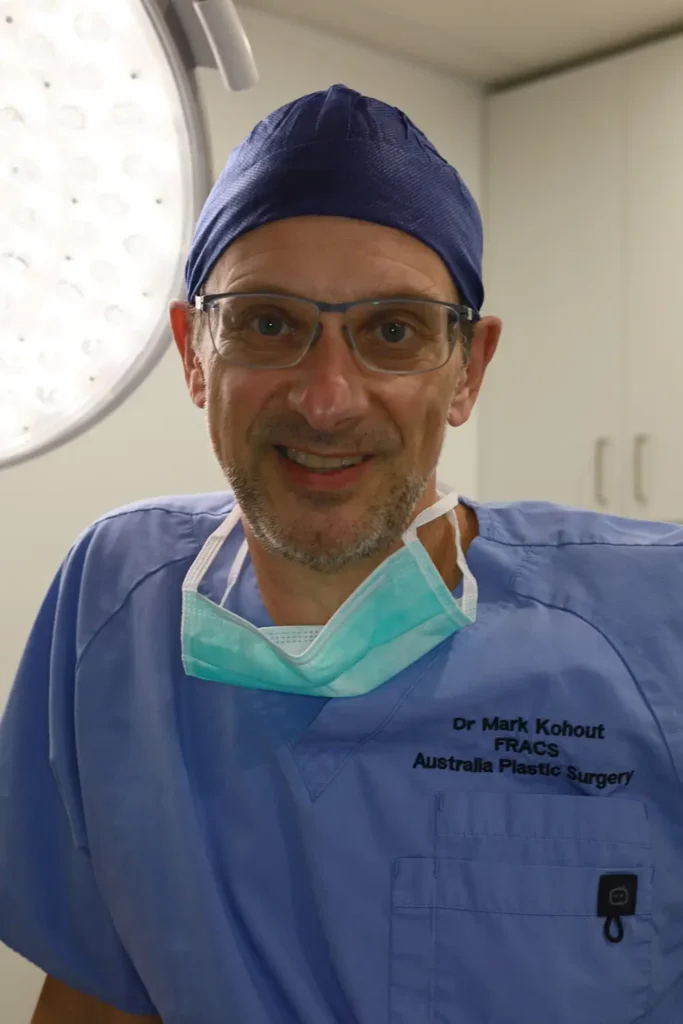
A qualified plastic surgeon who operates with care and integrity, based in central Sydney with over 20 years of experience in the cosmetic field. His extensive training and experience assures patients they are in well trained surgical hands. Dr. Kohout is a dedicated, friendly professional who is committed to providing the high quality care, support and results, alongside his compassionate team.

Dr Mark Kohout (MED0001133000)
Specialist Plastic Surgeon
Specialist registration in Surgery – Plastic Surgery

This website contains imagery which is only suitable for audiences 18+. All surgery contains risks, read more here.

X

Get Your Liposuction Guide

Get Your Facial Aesthetic

Get Your Breast Implant Removal

Get Your Female Genital Surgery Guide

Get Your Excess Skin Guide

Get Your Gynaecomastia Guide

Get Your Abdominoplasty Guide

Get Your Cost of Surgery Guide

Get Your Breast Implant Replace Guide

Get Your Breast Reduction Guide

Get Your Breast Augmentation Guide

Make an Enquiry