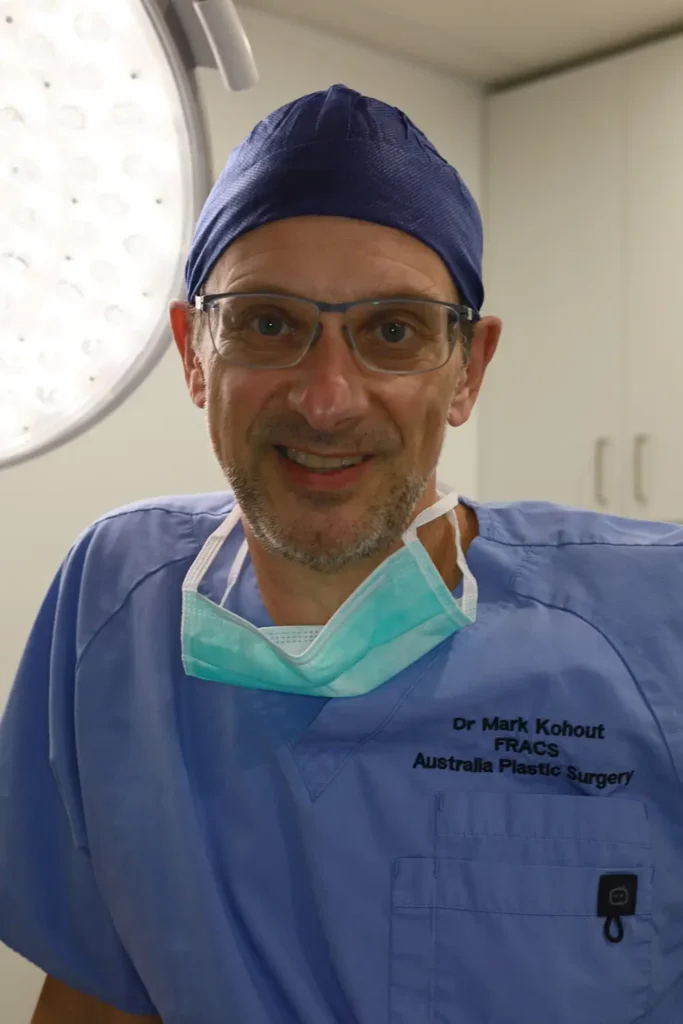
Dr Mark Kohout FRACS is a Specialist Plastic Surgeon based in Broadway, Sydney, with experience in body contouring procedures including buttock reshaping surgery. Buttock reshaping swelling and bruising commonly improve gradually, but the pattern and timing vary depending on the procedure, the patient’s healing response and the post-operative instructions provided by the surgical team.
Swelling and bruising after buttock reshaping can feel unsettling because the treated area may look and feel different from day to day. Patients often want to know what is expected, how long these changes may last and when they should contact the clinic. Understanding the usual recovery pattern can make the early healing period feel less uncertain.
This article provides general information for patients who are recovering from buttock reshaping or researching what to expect after surgery. It does not replace personalised post-operative advice from Dr Kohout’s practice, because swelling and bruising can vary depending on the surgical technique, incision placement, tissue response, activity level and individual healing progress.
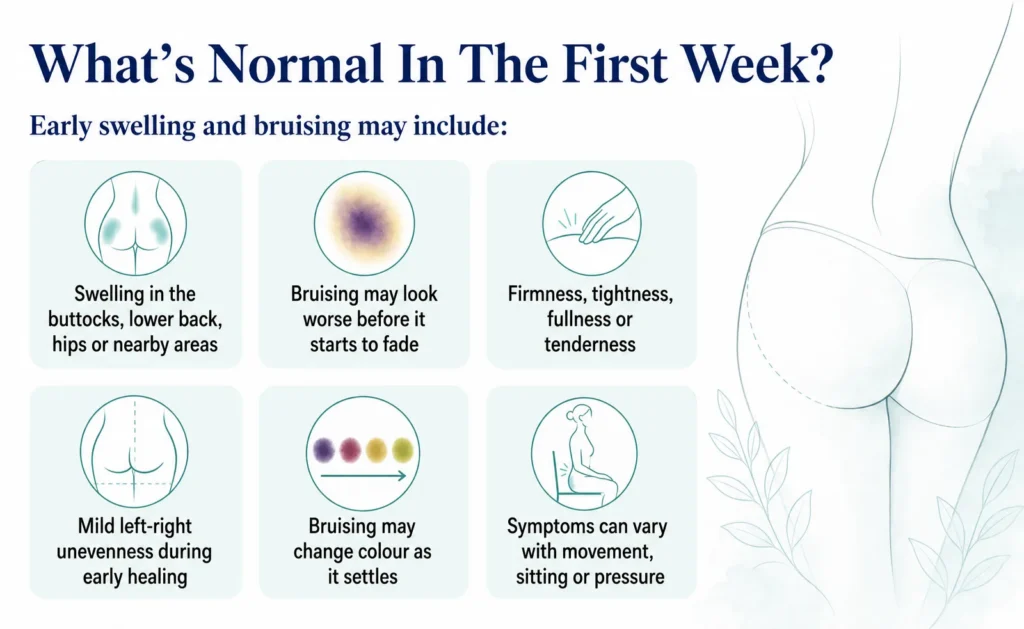
What’s Normal In The First Week
Dr Mark Kohout FRACS and his team at the Broadway Sydney practice provide post-operative instructions based on the patient’s procedure and recovery plan. In the first week after buttock reshaping, swelling and bruising commonly appear as the body begins healing from surgery.
Early swelling and bruising may include:
- Swelling around the buttock area, lower back, hips or nearby treated areas
- Bruising that becomes more visible before it begins to fade
- Firmness, tightness, fullness or tenderness in the surgical area
- Mild unevenness between the left and right sides during early healing
- Bruising that changes colour as it starts to settle
- Symptoms that fluctuate with movement, positioning, sitting or pressure
These changes do not automatically mean something has gone wrong, especially when they match the recovery information provided by the surgical team. However, patients should contact Dr Kohout’s Broadway Sydney practice if swelling or bruising feels sudden, severe, increasingly painful or different from the instructions they were given.
How Long Swelling And Bruising Typically Last
Visible bruising after buttock reshaping often improves earlier than deeper swelling. Swelling may continue to fluctuate after bruising fades because deeper tissues can take longer to settle.
During recovery, patients may notice:
- Bruising that gradually changes from darker colours to lighter yellow, green or brown tones
- Visible bruising improving before firmness or tightness fully settles
- Swelling that feels more noticeable after activity, sitting or standing
- Temporary changes in symmetry while both sides heal at different speeds
- A feeling of fullness or pressure that slowly reduces over time
- Ongoing subtle swelling even after the early recovery period has passed
There is no single guaranteed timeline for swelling and bruising after buttock reshaping, because healing varies between patients. Procedure type, swelling tendency, bruising tendency, garment use, positioning, activity level and follow-up care can all influence how recovery progresses.
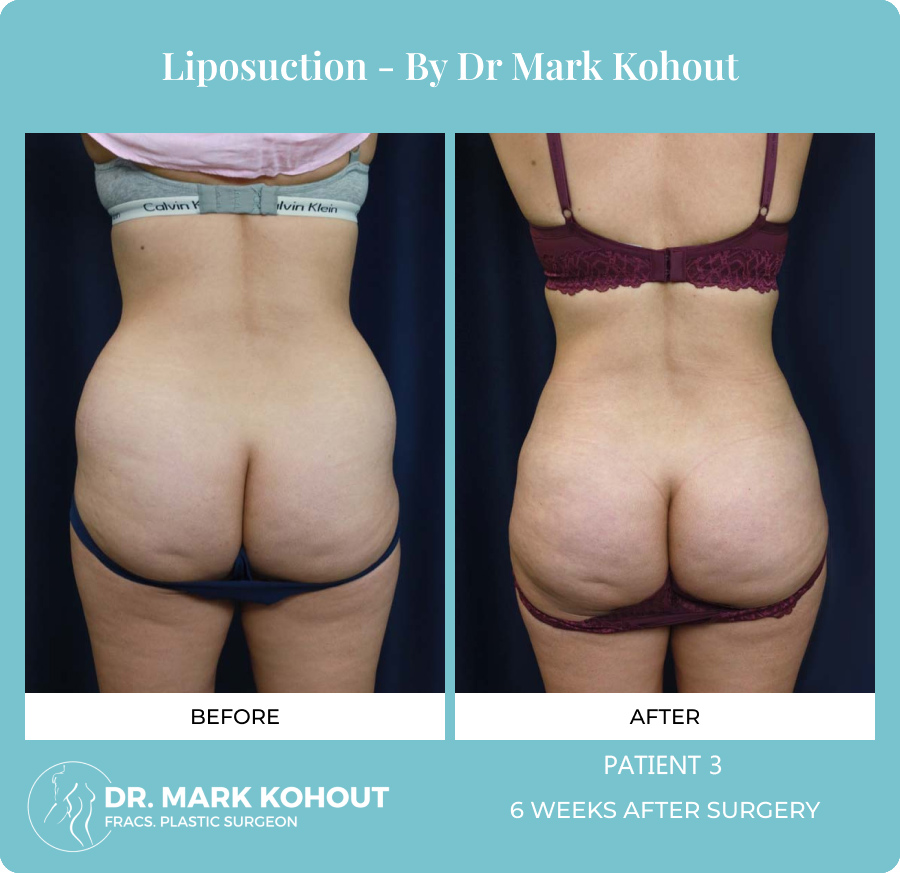
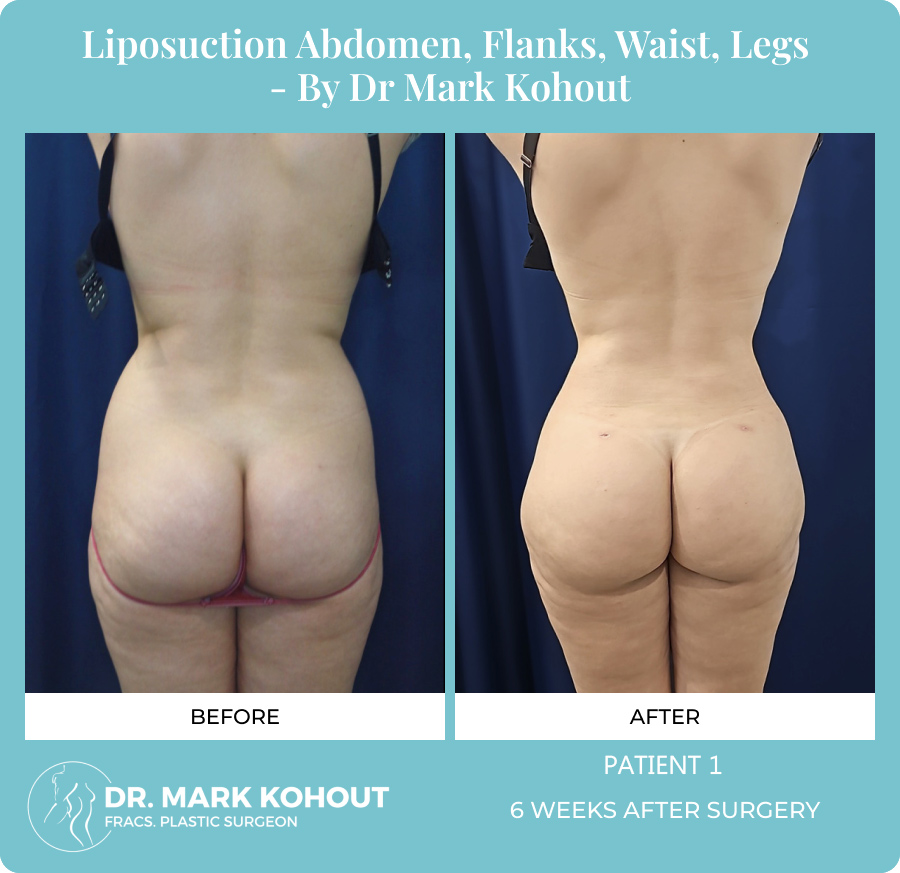
Buttock Liposuction Before and After Images
General Comfort Measures During Recovery
General comfort measures after buttock reshaping should focus on following the instructions provided by the surgical team. The aim is to support rest, reduce unnecessary pressure on the treated area and avoid activities that may make swelling or bruising feel worse.
Comfort measures may include:
- Wearing compression garments only as directed by the surgical team
- Avoiding direct pressure on the buttock area if this has been advised
- Using approved sitting and sleeping positions during early recovery
- Taking short, gentle walks if recommended by the care team
- Avoiding heavy lifting, high-impact exercise and overexertion early on
- Checking with the clinic before using supplements, bruise creams or home remedies
Patients should avoid assuming that a product, supplement or technique will make bruising disappear faster. Some products may not be appropriate during early healing, so it is safer to ask Dr Kohout’s team before adding anything new to the recovery routine.
When Swelling Or Bruising Needs Medical Attention
Most swelling and bruising after buttock reshaping improves gradually, but some changes should be reviewed by the clinic. Patients should contact Dr Kohout’s Broadway Sydney practice if symptoms feel sudden, severe, worsening or different from the recovery instructions they were given.
Concerning changes may include:
- Sudden one-sided swelling or a new area of tightness
- Severe pain or pain that is becoming worse rather than settling
- Bruising that expands quickly or feels increasingly painful
- Redness, warmth, pus, odour, wound separation or unusual drainage
- Fever, chills or feeling increasingly unwell
- Chest pain, shortness of breath, fainting or other urgent symptoms
This list is general guidance and is not intended to help patients diagnose themselves at home. If symptoms feel concerning, patients should contact Dr Kohout’s team for advice, and urgent symptoms such as chest pain, breathing difficulty, fainting or heavy bleeding should be treated as medical emergencies.
Contact Dr Kohout’s Broadway Sydney Practice With Recovery Concerns
If swelling or bruising after buttock reshaping feels unusual, sudden, severe or different from the instructions you were given, contact Dr Mark Kohout FRACS and his team at the Broadway, Sydney practice. Personalised recovery advice should be based on your procedure, symptoms, healing progress and follow-up plan.
Patients can also raise questions about swelling, bruising, garment use, sitting, sleeping, exercise and return to daily routines during follow-up. Clear guidance can help patients feel more informed while keeping recovery advice specific to their own surgical plan.
Buttock Reshaping Swelling And Bruising FAQs
Is swelling normal after buttock reshaping?
Yes, swelling is commonly part of early recovery after buttock reshaping surgery. The amount, location and duration of swelling can vary depending on the procedure, the patient’s healing response and the post-operative instructions provided by the surgical team.
Is bruising normal after buttock reshaping?
Bruising can occur after buttock reshaping and may become more visible before it starts to fade. Bruising should generally improve over time, but rapidly expanding, very painful or unusual bruising should be reviewed by the clinic.
Why does one side look more swollen than the other?
Mild uneven swelling can occur because each side of the body may heal at a different pace. Sudden one-sided swelling, increasing tightness or worsening pain should be discussed with Dr Kohout’s Broadway Sydney practice.
How long does bruising last after buttock reshaping?
Visible bruising often improves earlier than deeper swelling, but the exact timing varies between patients. Bruising may change colour as it fades, while firmness, tightness or swelling may take longer to settle.
How long does swelling last after buttock surgery?
Swelling can continue after visible bruising has improved because deeper tissues may take longer to settle. Activity level, sitting, pressure, garment use, heat and individual healing can all influence how swelling changes during recovery.
Can sitting make swelling worse after buttock reshaping?
Sitting may affect comfort and swelling if direct pressure on the treated area has been restricted. Patients should follow Dr Kohout’s specific sitting and positioning instructions rather than relying on general advice.
Can I use bruise creams or supplements after surgery?
Patients should check with Dr Kohout’s team before using bruise creams, herbal products, supplements or home remedies. Some products may not be suitable during early healing, and no product should be assumed to make bruising disappear faster.
When should I contact the clinic about swelling or bruising?
Patients should contact Dr Kohout’s Broadway Sydney practice if swelling or bruising is sudden, severe, worsening, one-sided or associated with increasing pain, wound changes, fever or feeling unwell. Chest pain, shortness of breath, fainting, heavy bleeding or other urgent symptoms require immediate medical attention.
Medical References

- Buttock Enhancement Risks and Safety – American Society of Plastic Surgeons. https://www.plasticsurgery.org/cosmetic-procedures/buttock-enhancement/safety
- Cosmeceuticals and Other Techniques to Reduce Bruising From Surgical and Cosmetic Procedures – Dermatological Reviews. https://onlinelibrary.wiley.com/doi/full/10.1002/der2.70013
- Results and long-term patient satisfaction after gluteal augmentation with platelet-rich plasma-enriched autologous fat – European Journal of Plastic Surgery. https://pmc.ncbi.nlm.nih.gov/articles/PMC3827835/
- The basic science of wound healing – Plastic and Reconstructive Surgery. https://pubmed.ncbi.nlm.nih.gov/16799372/
Take our Plastic Surgery Quiz to find out if you’d be a good candidate and if you are ready for cosmetic surgery.
Further Reading
- Read Dr Mark Kohout’s Blog on Preparing For Buttock Reshaping Surgery: A Practical Pre-Op Checklist
- Read Dr Mark Kohout’s Blog on Exploring Options for Changing Buttock Shape Without Fat Transfer
- Read Dr Mark Kohout’s Blog on Why Your Buttocks Look Flat Despite Exercise
Related Blog Posts
What Is Empty Buttock Syndrome? Causes,…
Volume changes in the buttocks are sometimes described as “Empty Buttock Syndrome,” a non-medical term used to explain a noticeable reduction in shape or projection following certain procedures or significant…
Gluteal Augmentation With Implants in Sydney:…
Interest in fuller, more projected buttock shapes has grown steadily, encouraged in part by social media and online imagery. Many people in Sydney arrive at a consultation with screenshots, mixed…
FAQs About Bodylift Surgery
Dr Mark Kohout, Plastic Surgeon in Sydney, brings over 25 years of experience in aesthetic and reconstructive surgery. His practice is known for its patient-focused approach and thorough consultation process.…
Experienced Plastic Surgeon
Dr. Mark Kohout
A qualified plastic surgeon who operates with care and integrity, based in central Sydney with over 20 years of experience in the cosmetic field. His extensive training and experience assures patients they are in well trained surgical hands. Dr. Kohout is a dedicated, friendly professional who is committed to providing the high quality care, support and results, alongside his compassionate team.
Dr Mark Kohout (MED0001133000)
Specialist Plastic Surgeon
Specialist registration in Surgery – Plastic Surgery